Content
Content

Let Curiosity Move You
We examine the world through a social justice and human rights lens that focuses on race and ethnicity.
Our minors and graduate specializations offer an interdisciplinary, experiential, comparative, and integrative education. Whether you focus on African and African American, Indigenous, or Latinx and Latin American Studies, you explore your intellectual and professional curiosity in a community-oriented, interactive culture.
Graduates from the Institute for Ethnic Studies go on to careers in business, education, government service, non-governmental organizations (NGOs), and other fields, as well as to graduate school, law school, and medical school.
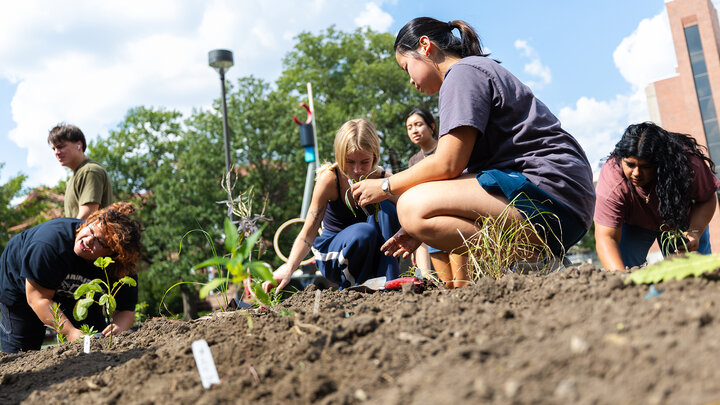
“This garden is a start. We want it to last, and we want it to grow—not just as a landscape, but as a way of being in relationship with this land, this university, and each other.”
Laura Muñoz
Latest News


Upcoming Events
Apply to Become a Husker Today
Let curiosity move you to the College of Arts and Sciences.
Specialized programs of study, hands-on learning opportunities, and a campus at the heart of a city with a little bit of everything: it's an exceptional Big Ten experience.
